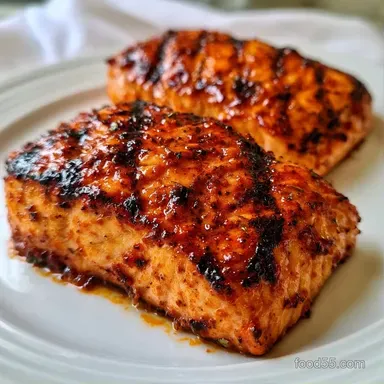
Simple Grilled Salmon with Smoky Char
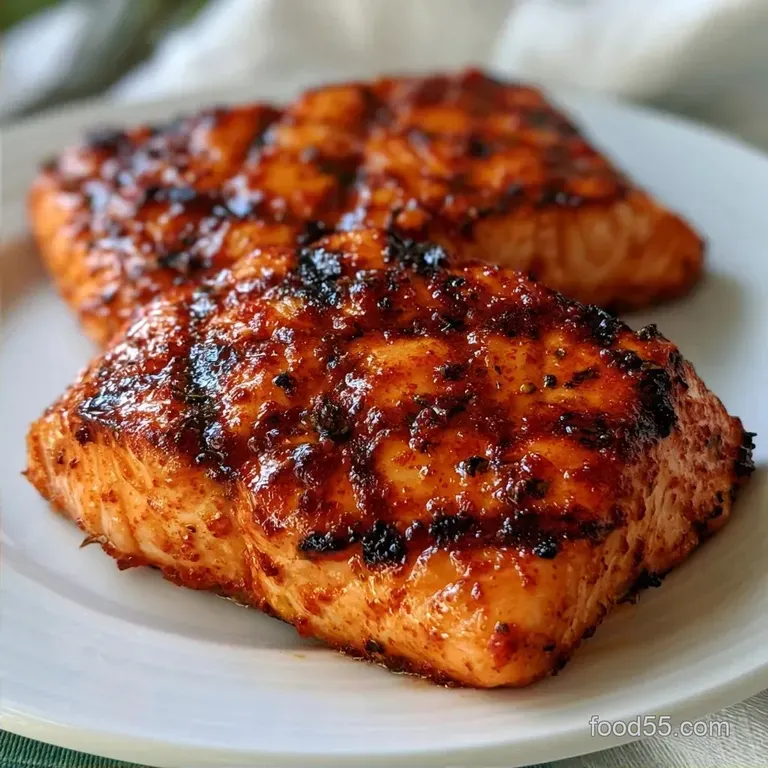
- Time: 5 min active + 10 min cook
- Flavor/Texture Hook: Smoky char with a crisp skin
- Perfect for: Quick healthy dinners or outdoor hosting
- How to Make Simple Grilled Salmon
- What These Ingredients Do
- Ingredients and Substitutes
- Required Grilling Tools
- Step by Step Process
- Salmon Troubleshooting Guide
- Flavor and Variety Ideas
- Scaling the Recipe
- Salmon Truths and Myths
- Storage and Leftovers
- Best Serving Suggestions
- Recipe FAQs
- 📝 Recipe Card
That sound of a fillet ripping in half as you try to flip it is the worst. I used to struggle with salmon sticking to the grill grates, leaving half the fish behind and resulting in a rubbery, overcooked mess. It usually happens because the skin is too damp or the grill isn't hot enough to create that immediate sear.
This approach fixes that by using a specific oil paste rub and a over high heat start. By coating the skin in a mix of oil and spices, you create a physical barrier between the protein and the metal. You get that satisfying crackle when the fish hits the grate, and it releases cleanly every time.
You can expect a meal that feels fancy but takes almost no effort. This Simple Grilled Salmon stays moist on the inside while the outside gets a vibrant, smoky crust. It is a straightforward process that works whether you are using a gas grill or a charcoal setup.
How to Make Simple Grilled Salmon
Right then, let's get into why this works. The main struggle with fish is the window between "raw" and "rubber." Salmon is forgiving, but only if you manage the heat and the moisture.
Dry Skin: Patting the fish with paper towels removes surface water. This stops the fish from steaming, which is what causes it to stick to the grill.
Oil Barrier: Rubbing oil directly onto the skin and flesh prevents the proteins from bonding to the metal grates.
Heat Momentum: Using a medium high heat ensures the skin crisps up quickly, creating a natural "non stick" layer.
| Feature | Fast Method (This Recipe) | Classic Indirect Method |
|---|---|---|
| Total Time | 20 minutes | 30-40 minutes |
| Texture | Charred and crispy | Gently poached/firm |
| Best For | Weeknight meals | Large dinner parties |
What These Ingredients Do
I don't believe in over complicating a good piece of fish. The goal is to support the flavor of the salmon, not hide it under a mountain of sauce.
| Ingredient | What It Does | Best Swap |
|---|---|---|
| Olive Oil | Prevents sticking and carries heat | Avocado oil (higher smoke point) |
| Smoked Paprika | Adds a wood fired aroma and red color | Ancho chili powder for a mild kick |
| Garlic Powder | Gives a savory depth without burning | Onion powder for a sweeter note |
Ingredients and Substitutes
Grab these items before you start. I suggest using local, sustainably sourced fillets if you can find them at your market.
- 4 6 oz salmon fillets, skin on Why this? Skin protects the meat from direct heat
- 2 tbsp olive oil Why this? Helps the spices stick and prevents tearing
- 1 tsp kosher salt Why this? Draws out moisture for a better sear
- 1/2 tsp black pepper Why this? Adds a sharp, basic bite
- 1 tsp garlic powder Why this? More consistent than fresh garlic on a grill
- 1/2 tsp smoked paprika Why this? Mimics a charcoal fire flavor
Required Grilling Tools
You don't need a professional kitchen for this, but a few things make it easier.
- Fish Spatula: A wide, thin metal spatula is essential. It slides under the skin without breaking the fillet.
- Instant Read Thermometer: This is the only way to be sure the fish is done.
- Paper Towels: For getting that skin bone dry.
- Pastry Brush: Useful for getting the oil rub into every crevice.
Step by step Process
Let's crack on with the cooking. Make sure your grill is fully preheated before the fish even touches the counter.
- Pat the salmon fillets completely dry using paper towels. Note: Any moisture left will cause the fish to stick.
- In a small bowl, whisk together the olive oil, salt, pepper, garlic powder, and smoked paprika.
- Brush the seasoning mixture generously over all sides of the fish, ensuring the skin is well coated to prevent sticking.
- Preheat the grill to medium high heat (approximately 400°F / 200°C).
- Place the fillets skin side down on the grill. Press down lightly for 5 seconds to ensure optimal surface contact.
- Grill undisturbed for 4–6 minutes until the skin is crispy and releases easily from the grate.
- Flip the fillets carefully and grill for another 3–5 minutes, or until the internal temperature reaches 135°F (57°C) for medium rare or 145°F (63°C) for medium.
- Remove the salmon from the heat immediately and let it rest on a platter for 5 minutes to allow the juices to redistribute.
Chef's Note: If the fish feels "glued" to the grill, don't force it. Give it another 30 seconds. The skin will naturally release once it has charred sufficiently.
Salmon Troubleshooting Guide
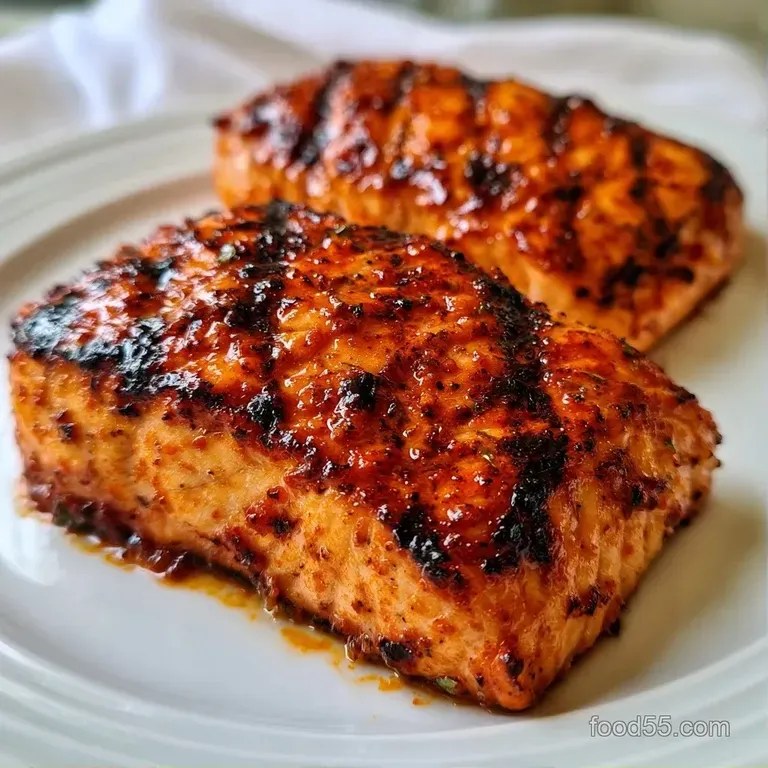
Even with the right technique, things can go sideways. Usually, it's a heat or moisture issue.
Why Your Salmon Sticks
If the fillets tear, your grill was likely too cold or the fish was too wet. The oil rub helps, but the heat does the heavy lifting. Ensure the grate is hot enough that a drop of water dances and evaporates instantly.
Fixing Overcooked White Albumin
That white stuff that oozes out of the fish is just protein (albumin). It happens when the muscle fibers contract too quickly from high heat. While it is safe to eat, you can minimize it by not overcooking the fish pull it off the grill a few degrees early.
Why the Skin Isn't Crispy
If the skin is soggy, you might have flipped the fish too early. You need to hear that sizzle and see the edges of the skin curling up slightly before you move it.
| Problem | Root Cause | Solution |
|---|---|---|
| Tearing skin | Low grill temp | Increase heat to 400°F |
| Dry interior | Overcooked | Pull at 135°F internal temp |
| Bland taste | Under seasoned | Rub spices into the flesh side |
Flavor and Variety Ideas
Once you've got the base of this Simple Grilled Salmon recipe down, you can play with the toppings. I love keeping the rub simple and adding a fresh finish right before serving.
If you want a bit more zing, try a lemon sauce for grilled salmon to brighten the smoke. The acidity cuts through the richness of the fish perfectly.
For a different vibe, try a Simple Grilled Salmon Glaze by mixing honey, soy sauce, and a pinch of ginger. Brush this on only during the last 2 minutes of cooking to prevent the sugars from burning. If you're doing a keto version, just swap the honey for a bit of extra butter and lemon zest.
Scaling the Recipe
Adjusting for a crowd or a solo dinner is easy, but the heat management changes.
Cooking for one or two: Use a smaller section of the grill to concentrate the heat. Reduce the total cook time by about 20% if you are using thinner fillets (under 1 inch).
Cooking for a crowd (8+ fillets): Work in batches. If you crowd the grill, the temperature drops and the fish will steam rather than sear. Also, only increase the salt and paprika to 1.5x the original ratio too much salt can draw out too much moisture when cooking in large volumes.
Salmon Truths and Myths
There are a few things people always say about grilling fish that just aren't true.
The "Seal in Juices" Myth: Searing the fish doesn't actually lock in moisture. The juices move regardless of the crust. The sear is entirely about flavor and texture.
The Skin Myth: Some think the skin is just a wrapper to be discarded. In reality, the skin contains the most flavor and protects the delicate meat from the harsh heat of the grill.
Storage and Leftovers
Grilled salmon is great fresh, but it stays good in the fridge for 3 days if kept in an airtight container.
To reheat without drying it out, avoid the microwave. Put the fillets in a covered baking dish with a tablespoon of water or butter and heat in the oven at 275°F (135°C) for about 10 minutes. This gently warms the fish without continuing the cooking process.
For zero waste, don't toss the leftover scraps. If you have small bits of fish left over, flake them into a cold pasta salad or use them to top a piece of avocado toast the next morning.
Best Serving Suggestions
Simple Grilled Salmon needs sides that balance its richness. I usually pair this with something bright and crisp.
I often serve this with a creamy dill sauce on the side for a classic touch. For vegetables, asparagus or snap peas tossed in olive oil and grilled right next to the fish for 5 minutes are a natural fit.
If you want something heartier, a scoop of quinoa or a wild rice blend works well. The earthiness of the grains complements the smoky paprika rub. Just keep the sides light so the fish remains the star of the plate.
Recipe FAQs
What seasonings to put on salmon for grilling?
Use olive oil, salt, pepper, garlic powder, and smoked paprika. This specific blend creates a savory, smoky crust that complements the richness of the fish without overpowering it.
How do you make grilled salmon?
Pat fillets dry and brush with a mix of olive oil, salt, pepper, garlic powder, and smoked paprika. Grill skin side down at 400°F for 4 6 minutes, then flip and cook for another 3 5 minutes until the internal temperature reaches 135°F to 145°F.
How do you cook salmon in a foil pouch on the grill?
Place seasoned fillets on foil and fold the edges to create a sealed packet. Grill at 400°F for 10 12 minutes to steam the fish in its own juices for a more tender texture.
How do you cook salmon on the stovetop?
Sear skin side down in a hot pan with olive oil over medium high heat. Cook for 4 6 minutes, flip, and finish for 3 5 minutes; this pairs perfectly with a creamy cucumber salad for a fresh contrast.
What is the best way to grill salmon on a pellet grill?
Set the grill to 400°F and cook skin side down first. The convection heat is highly efficient, but maintaining the 4 6 minute sear per side is still essential for crispy skin.
How do you cook salmon for one person?
Prepare a single 6-oz fillet using a proportional amount of the seasoning mix. Use a smaller cooking surface or a dedicated section of the grill to ensure the heat remains concentrated.
How do you cook salmon for a diabetic?
Use the recipe as written with olive oil and dry spices. Because this blend contains no added sugars, honey, or syrups, it is naturally low-glycemic and heart healthy.
Simple Grilled Salmon