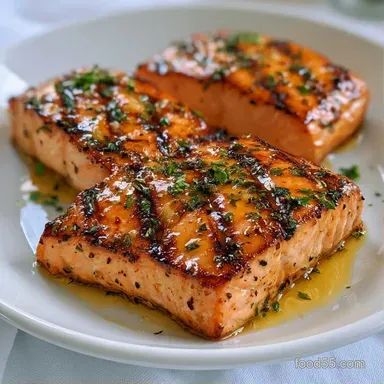
Perfect Grilled Salmon with Garlic Powder
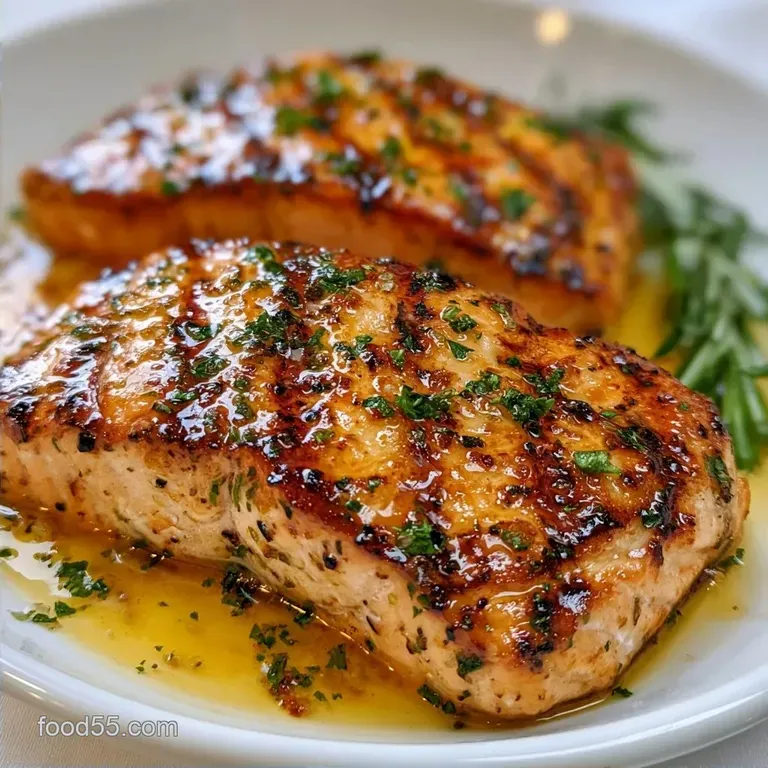
- Time: 5 min active + 10 min cooking + 15 min resting/prep
- Flavor/Texture Hook: Charred exterior with a flaky, tender center
- Perfect for: Seasonal dinner parties or a healthy weeknight meal
- Getting a Perfect Grilled Salmon Every Time
- How the Heat Works
- What Each Ingredient Does
- What You'll Need
- Essential Grilling Gear
- Simple Steps to Grill
- Fixing Salmon Grill Issues
- Fresh Flavor Twists
- Adjusting the Batch Size
- Salmon Grilling Truths
- Keeping Salmon Fresh
- What to Serve With It
- High in Sodium
- Recipe FAQs
- 📝 Recipe Card
Getting a Perfect Grilled Salmon Every Time
The smell of searing fish on a hot grill is one of my favorite parts of summer. There is something about that charred edge and the smell of lemon and butter that just feels like the season. I used to think I needed to marinate my fish for hours to keep it from drying out, but that's actually a myth.
Over marinating with acids like lemon or vinegar can actually break down the protein and make the texture mushy. You don't need a complex soak for a Perfect Grilled Salmon. All you really need is a over high heat sear and a thermometer to tell you when to stop.
The goal here is to keep the fish moist while getting those beautiful grill marks. By focusing on the internal temperature rather than just a timer, you can ensure a Perfect Grilled Salmon regardless of whether your fillets are thin or thick.
How the Heat Works
Surface Moisture: Patting the fish dry removes water that would otherwise steam the fish instead of searing it.
The Oil Barrier: A thin layer of avocado oil creates a non stick shield and helps heat transfer evenly into the flesh.
Honestly, if you're looking to add a little more zing after the grill, my Dill Salmon Sauce is a great way to add freshness without overcooking the fish.
| Approach | Cook Time | Texture | Best For |
|---|---|---|---|
| Fast Sear | 8-10 mins | Crispy skin, rare center | Thin fillets |
| Classic | 12-15 mins | Evenly cooked, medium | Thick center cuts |
What Each Ingredient Does
| Ingredient | What It Does | Best Swap |
|---|---|---|
| Avocado Oil | High smoke point for searing | Grapeseed oil |
| Garlic Powder | Adds savory depth without burning | Onion powder |
| Unsalted Butter | Adds richness and a glossy finish | Melted coconut oil |
What You'll Need
- 4 (6 oz / 170g) center cut salmon fillets Why this? Even thickness ensures they all finish at once
- 2 tbsp (30ml) avocado oil Why this? Won't smoke at high grill temps
- 1 tsp (5g) kosher salt Why this? Coarser grains are easier to distribute
- ½ tsp (2g) freshly cracked black pepper Why this? Better aroma than pre ground
- 1 tsp (2g) garlic powder Why this? Won't burn like fresh garlic bits
- 2 tbsp (30g) unsalted butter, melted Why this? Creates a rich, savory glaze
- 1 tbsp (15ml) fresh lemon juice Why this? Cuts through the fat of the salmon
- 1 tsp (2g) chopped fresh parsley Why this? Adds a pop of seasonal color
Essential Grilling Gear
You'll want a sturdy set of tongs for flipping and a digital instant read thermometer. I usually use a Thermapen, but any reliable probe works. If you're using a gas grill, make sure your burners are clean. A grill brush is a must to prevent the skin from sticking to old residue.
Simple Steps to Grill
- Pat the salmon fillets completely dry with paper towels. Note: This is the only way to get a real sear.
- Rub the avocado oil evenly over all sides of the fish.
- Season with salt, pepper, and garlic powder.
- Let the fillets sit at room temperature for 10 minutes. Note: This prevents the center from staying raw while the outside burns.
- Preheat the grill to medium high heat (375°F to 450°F / 190°C to 230°C).
- Wipe the grill grates clean and lubricate them with an oil dipped paper towel.
- Place salmon fillets skin side down on the grill. Close the lid and grill for 4–6 minutes until the skin releases easily from the grate.
- Flip carefully and grill for another 3–5 minutes.
- Check the thickest part with a thermometer. Remove from heat when it hits 130°F (54°C) for medium rare or 135°F (57°C) for medium. Note: According to Serious Eats, carryover cooking will raise the temp by a few degrees while resting.
- Transfer to a platter and immediately brush with the melted butter and lemon juice mixture.
- Let the fish rest for 5 minutes before serving.
Fixing Salmon Grill Issues
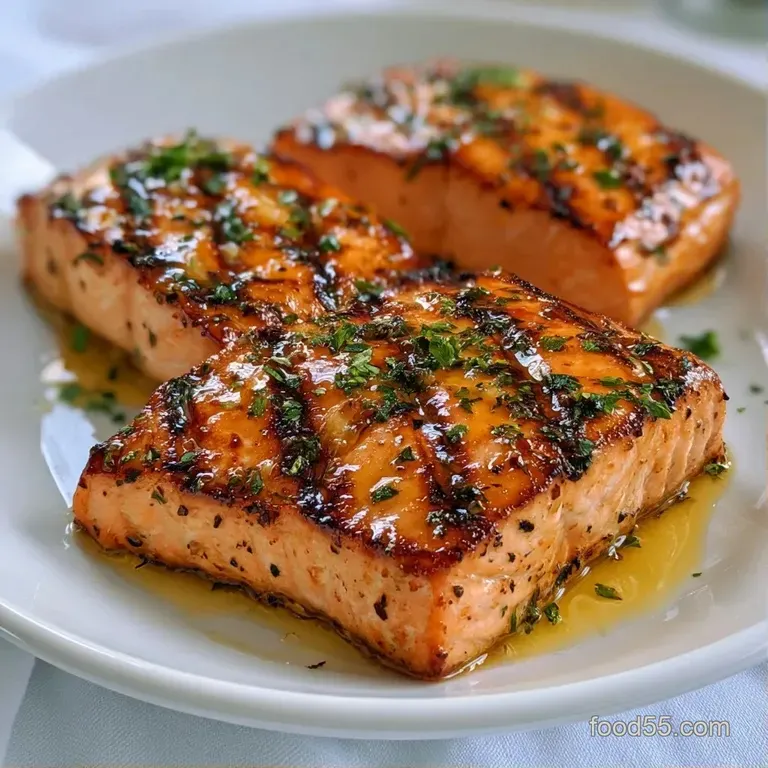
When you're aiming for a Perfect Grilled Salmon, the biggest enemy is the grill grate. If the fish sticks, you'll end up tearing the fillet. Usually, this happens because the fish was flipped too early or the grates weren't hot enough.
Another common issue is the "white stuff" (albumin) pushing out of the fish. This is just protein, but it usually means the fish is cooking too fast or is getting overdone. To keep your Perfect Grilled Salmon looking clean, keep a close eye on that internal temp.
| Problem | Root Cause | Solution |
|---|---|---|
| Fillet sticks to grate | Flipped too early | Wait for skin to sear and release naturally |
| Dry, chalky texture | Overcooked | Pull fish at 130°F (54°C) and let rest |
| Raw center, burnt outside | Heat too high | Lower heat and close the lid to cook through |
Fresh Flavor Twists
If you want to change things up, try a different rub. A mix of brown sugar and paprika creates a lovely caramelized crust. For a more vibrant, seasonal vibe, you can top the fish with a fresh mango and avocado salsa.
For those who love a bit more brightness, my Grilled Salmon Lemon Sauce is a fantastic addition. You can also try adding a pesto crust during the last 2 minutes of grilling for a rich, herbaceous finish. If you're using wild caught sockeye, remember it's leaner than Atlantic salmon, so pull it off the heat a couple of minutes earlier to keep it moist.
Adjusting the Batch Size
If you're making a smaller batch of Perfect Grilled Salmon, like just two fillets, you can use a smaller section of the grill. I find that reducing the grill surface area helps keep the heat more concentrated, but keep the timing the same.
When scaling up for a crowd, don't overcrowd the grates. If the fillets are touching, they'll steam instead of sear. Work in batches if you have to. For larger quantities, I suggest reducing the salt and garlic powder by about 10% since the flavors concentrate more when cooking in bulk.
Salmon Grilling Truths
Searing the fish does not "seal in" the juices. That's a common myth. Moisture loss happens regardless of how you start the cook. The sear is actually about flavor and texture, not about creating a waterproof barrier.
Some people think you should grill salmon on a bed of lemon slices. While it looks pretty, the lemons often burn before the fish is done, leaving a bitter taste. It's better to use the lemon juice as a finishing touch after the fish has rested.
Keeping Salmon Fresh
Store any leftovers in an airtight container in the fridge for up to 3 days. When you reheat it, avoid the microwave if you can. I prefer putting it in a 275°F (135°C) oven for 5-10 minutes to gently warm it through without drying it out.
For the freezer, wrap the cooked Perfect Grilled Salmon tightly in foil and then a freezer bag. It'll stay good for about 2 months.
To avoid waste, save the salmon skin if you didn't eat it. You can crisp it up in a pan with a little oil to make "salmon chips" for a salad. If you have leftover lemon wedges, toss them into your compost or use them to infuse some water for a refreshing drink.
What to Serve With It
This dish is quite rich, so you need something bright to balance it out. A crisp cucumber salad with rice vinegar and sesame oil works well. I also love serving it alongside grilled asparagus or a simple quinoa pilaf with fresh herbs.
If you're hosting a dinner party, try pairing it with a chilled glass of Sauvignon Blanc or a light Pinot Noir. For a non alcoholic option, a sparkling water with a splash of cranberry and a lime wedge keeps the meal feeling fresh and seasonal.
High in Sodium
1120 mg 1,120 mg of sodium per serving (49% 49% of daily value)
The American Heart Association recommends a daily sodium limit of no more than 2,300 mg, and an ideal limit of 1,500 mg for most adults to reduce cardiovascular risk.
Tips to Reduce Sodium
-
Reduce Added Salt-25%
Cut the kosher salt in half or eliminate it entirely; the salmon's natural flavor is often sufficient when paired with other aromatics.
-
Boost Citrus Acid-15%
Increase the fresh lemon juice or add lemon zest to provide a bright, acidic punch that mimics the taste of salt.
-
Swap for Fresh Garlic-10%
Replace garlic powder with freshly minced garlic to add more robust flavor without the potential sodium additives found in some powders.
-
Enhance Fresh Herbs
Increase the amount of fresh parsley or add fresh dill to enhance the aromatic profile of the dish without adding any sodium.
Recipe FAQs
How do you make grilled salmon?
Pat fillets dry and rub with avocado oil, salt, pepper, and garlic powder. Grill skin side down for 4 6 minutes at 375°F to 450°F, then flip and cook for 3 5 minutes until the internal temperature reaches 130°F to 135°F.
Should you flip salmon when grilling?
Yes, flip once. Start with the skin side down to protect the delicate flesh, then flip carefully after 4 6 minutes to achieve a sear on the other side.
How long does it take salmon to get done on the grill?
Cook for approximately 7 to 11 minutes total. Grill for 4 6 minutes on the skin side and 3 5 minutes on the flesh side, always using a digital thermometer to confirm the center is done.
What are the common mistakes in grilling salmon?
Leaving surface moisture on the fish and overcooking the center. Failing to pat the fillets dry causes the fish to steam instead of sear, while ignoring the internal temperature leads to dry, tough meat.
How do you cook salmon in a foil pouch on the grill?
Place seasoned fillets on foil and seal the edges tightly. Grill over medium high heat, but monitor the internal temperature carefully as the trapped steam accelerates the cooking process.
How do you cook salmon on the stovetop?
Sear in a hot pan with avocado oil over medium high heat. If you enjoyed mastering high heat searing here, see how the same principle works in our stove top tuna dish.
Is it true that you need to marinate salmon for hours to keep it moist?
No, this is a common misconception. Over marinating with acids can break down the protein and make the texture mushy; a simple oil rub and precise temperature control are more effective.
Perfect Grilled Salmon